Location: Majuro, Marshall Islands
Position: 07°06.30' N 171°22.39' E
Next Dest: Fiji (with potential stops in Kiribati, Wallis, or Samoa … sometime in May)
Another week or so in Majuro. Still just hanging around, getting chores done, relaxing, and of course, waiting for mail. Although utilizing the US Postal Service, the mail service here is anything but swift or consistent! As of today, a package we sent via AIR from the States has now taken longer than a package we sent via GROUND from the states … and I’m sure we paid twice as much. Even more ironic is we did receive a package today, and it was the third, of three packages sent by Chris’ dad … we still haven’t received the first two or the one sent by us weeks earlier! We aren’t too concerned that they’ll make it, they usually do … it’s just looking like we’ll be waiting for mail instead of weather for our departure come May!!!
There has been lots of cruiser socializing the last week or so. We joined in on the Yacht Club End of the [Racing] Year Bash, where we feasted on BBQ and joined in on the beer (or soda) can sailboat races. The local children make these cool mini sail boats out of cans and usually race them across puddles throughout town. At the party they sell the boats (as a fundraiser) and then we race them across the local resort’s swimming pool. Chris’ boat sank pretty quickly, while I managed to make it into the second round, but then, just inches from a second place finish, by boat stalled out and water came in from behind … I managed to pull her out just before she began to sink into the depths of the resort deep-end. While I didn’t place, I did manage to get my picture in the local News Paper (launching my boat)!!!
A few days after that we joined in on the sushi competition. It was more work then I think either of us expected, but we had a great time and shared some great sushi as well as learned a few new tricks and tips from the other two sushi teams.
And then a few more days later and we celebrated one of our friends birthdays at a surprise get together.
Friday, our good friends on Island Sonata finally departed to visit some of the outer atolls of the Marshall’s. There is a good chance that we won’t see them again until Australia, which will be weird since we’ve traveled so far with them and spent so much time together.
We had a good Easter Sunday, starting our first Easter breakfast tradition of Hazelnut-chocolate Crepes! Yum were they ever good … good enough that we motioned, voted, and passed the proposal to turn chocolate crepes into an Easter (and maybe other holidays as well) tradition. As I had forgotten to get to the store, I had to be a little creative with our Easter dinner, we managed just fine with a vegetable lasagna and garlic bread. The Easter Bunny seems to have forgotten to stop at Billabong this year, but lucky for us he had managed to find us a few weeks earlier, on our visit to the States, at an early Easter Celebration with Chris’ family in MA!
Continue reading "Passing Time in Majuro"...
Sunday, April 16, 2006

Thursday, April 06, 2006
Still enjoying Majuro
Location: Majuro, Marshall Islands
Position: 07°06.30' N 171°22.39' E
Next Dest: Fiji (with potential stops in Kiribati, Wallis, or Samoa)
After all this time, you’d probably expect us to have moved on and be god knows where … but nope, we are still hanging in Majuro! It hasn’t been boring though – after the new year, we made an impromptu decision to head home for a much desired visit with family and friends we hadn’t seen in two & a half years. We spent six great, but hectic, weeks in the states, visiting CA, AZ, and MA. The states were a shock to our systems, especially after all our time in the remote atolls of Kiribati … we were overwhelmed by the mounds of cars, people, and noise. Never had a place seemed so loud! While it was cold back East, the temperature change was a nice variety to the hot, humid climates of the tropics. Unfortunately, both of us were sick with one type of illness or another almost the entire time we were home! Most importantly though, we were finally able to spend some quality time with friends and family, reacquainting ourselves with barely known nieces and nephews. It was mixed emotions when we left the states … extremely sad to once again be saying goodbye, but very much looking forward to the slow relaxed (and quiet) pace of the boat.
It’s amazing how six weeks can change your entire view of a place. When we first arrived in Majuro, the consistent winds in the anchorage made the temperature decent and quite livable. When we first hit the shops we stood mouths agape, huge smiles forming at all the goods available. The major grocery store in Majuro, Payless, was amazing with multiple rows of American goods, rather than one measly shelf of tinned products.
THEN WE WENT HOME. I guess two and a half years had downsized my memory of American grocery stores. WOW! Three different colors of bell peppers, vegetables that weren’t rotting or covered with flies. A WHOLE aisle of cereal! Oh and don’t even get me started on the cheese and meat sections. Every grocery store we entered I felt obligated to walk EVERY aisle, sometimes multiple times! So clean, so full!!!
The first thing that hit us on our return to Majuro was the suffocating steamy heat engulfing us. Within seconds we were dripping with sweat. Was it always this humid here? What a bummer, we’d finally acclimated to the intense heat and massive humidity of the tropics, only to have to go through the entire torture process over again!!! Next up, we visited Payless … how depressing. How had I been so amazingly happy over such a pitiful store? Wilted veggies, no cheese other than cheddar, no multi grain breads, oh I could go on and on….
It wasn’t all painful though, on our first morning home, I was thrilled to wake up and get back into our leisurely morning pace. And so quiet here! And it didn’t take long before we’d re-acclimated, both to the weather and the shopping facilities. As a matter of fact, just yesterday, after Payless had restocked with the arrival of a ship, I once again found myself running about extremely pleased by the availability of certain foods here in Majuro … I even scored Mozzarella and Parmesan … both in the same day!!! You can’t beat that!
As for what else has been going on in the weeks since we’ve been back, there isn’t a whole lot to report; It took Chris a good two weeks to get healthy again (we believe he may have ended up with Strep Throat). We’ve been working on miscellaneous projects, both fun and tedious. I’ve spent a lot of time on the computer (working on websites and videos) and Chris playing with all his new fishing gear (of which we now own mounds and mounds of thanks to his over zealous shopping sprees in Majuro including the purchase of 1/5 a fishing store for $100). We’ve been bowling every Thursday and attended a variety of cruiser social events, including the Coconut Cup Regatta, which Chris joined in on as crew on Navire, and I attended as part of the Race Committee (everyone wondered why we didn’t Race Billabong … easily explained once they learned I don’t like to sail!). This Sunday there is a Cruiser Sushi Fest, where Chris will be competing as one of the sushi chefs. While we miss our families and friends, we are thrilled to be back on Billabong and back to our normal routines (the question that remains, is how will we ever manage to live back in the States!!!)
We are entertaining a variety of ideas for our next destination; Samoa, Wallis, and/or Kiribati. No matter what, we will definitely return to Fiji. We’ll probably depart Majuro in the beginning of May. At this time we aren’t sure what, if any, outer atolls of the Marshall Islands we’ll get a chance to visit. We’ve heard a LOT of good things about the other atolls, but the timing just might not work out. As we’ve learned, you can’t always see everything, and it was well worth it to give up time in the Marshall’s for our visit home.
Continue reading "Still enjoying Majuro"...
Position: 07°06.30' N 171°22.39' E
Next Dest: Fiji (with potential stops in Kiribati, Wallis, or Samoa)
After all this time, you’d probably expect us to have moved on and be god knows where … but nope, we are still hanging in Majuro! It hasn’t been boring though – after the new year, we made an impromptu decision to head home for a much desired visit with family and friends we hadn’t seen in two & a half years. We spent six great, but hectic, weeks in the states, visiting CA, AZ, and MA. The states were a shock to our systems, especially after all our time in the remote atolls of Kiribati … we were overwhelmed by the mounds of cars, people, and noise. Never had a place seemed so loud! While it was cold back East, the temperature change was a nice variety to the hot, humid climates of the tropics. Unfortunately, both of us were sick with one type of illness or another almost the entire time we were home! Most importantly though, we were finally able to spend some quality time with friends and family, reacquainting ourselves with barely known nieces and nephews. It was mixed emotions when we left the states … extremely sad to once again be saying goodbye, but very much looking forward to the slow relaxed (and quiet) pace of the boat.
It’s amazing how six weeks can change your entire view of a place. When we first arrived in Majuro, the consistent winds in the anchorage made the temperature decent and quite livable. When we first hit the shops we stood mouths agape, huge smiles forming at all the goods available. The major grocery store in Majuro, Payless, was amazing with multiple rows of American goods, rather than one measly shelf of tinned products.
THEN WE WENT HOME. I guess two and a half years had downsized my memory of American grocery stores. WOW! Three different colors of bell peppers, vegetables that weren’t rotting or covered with flies. A WHOLE aisle of cereal! Oh and don’t even get me started on the cheese and meat sections. Every grocery store we entered I felt obligated to walk EVERY aisle, sometimes multiple times! So clean, so full!!!
The first thing that hit us on our return to Majuro was the suffocating steamy heat engulfing us. Within seconds we were dripping with sweat. Was it always this humid here? What a bummer, we’d finally acclimated to the intense heat and massive humidity of the tropics, only to have to go through the entire torture process over again!!! Next up, we visited Payless … how depressing. How had I been so amazingly happy over such a pitiful store? Wilted veggies, no cheese other than cheddar, no multi grain breads, oh I could go on and on….
It wasn’t all painful though, on our first morning home, I was thrilled to wake up and get back into our leisurely morning pace. And so quiet here! And it didn’t take long before we’d re-acclimated, both to the weather and the shopping facilities. As a matter of fact, just yesterday, after Payless had restocked with the arrival of a ship, I once again found myself running about extremely pleased by the availability of certain foods here in Majuro … I even scored Mozzarella and Parmesan … both in the same day!!! You can’t beat that!
As for what else has been going on in the weeks since we’ve been back, there isn’t a whole lot to report; It took Chris a good two weeks to get healthy again (we believe he may have ended up with Strep Throat). We’ve been working on miscellaneous projects, both fun and tedious. I’ve spent a lot of time on the computer (working on websites and videos) and Chris playing with all his new fishing gear (of which we now own mounds and mounds of thanks to his over zealous shopping sprees in Majuro including the purchase of 1/5 a fishing store for $100). We’ve been bowling every Thursday and attended a variety of cruiser social events, including the Coconut Cup Regatta, which Chris joined in on as crew on Navire, and I attended as part of the Race Committee (everyone wondered why we didn’t Race Billabong … easily explained once they learned I don’t like to sail!). This Sunday there is a Cruiser Sushi Fest, where Chris will be competing as one of the sushi chefs. While we miss our families and friends, we are thrilled to be back on Billabong and back to our normal routines (the question that remains, is how will we ever manage to live back in the States!!!)
We are entertaining a variety of ideas for our next destination; Samoa, Wallis, and/or Kiribati. No matter what, we will definitely return to Fiji. We’ll probably depart Majuro in the beginning of May. At this time we aren’t sure what, if any, outer atolls of the Marshall Islands we’ll get a chance to visit. We’ve heard a LOT of good things about the other atolls, but the timing just might not work out. As we’ve learned, you can’t always see everything, and it was well worth it to give up time in the Marshall’s for our visit home.
Continue reading "Still enjoying Majuro"...
Sunday, December 25, 2005
Photos: Year in Review 2005
Here's a collection of our favorite photos for 2005
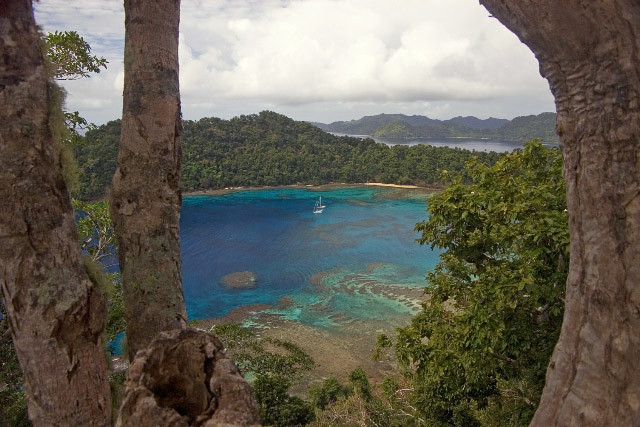
Continue reading "Photos: Year in Review 2005"...
Continue reading "Photos: Year in Review 2005"...
Thursday, December 22, 2005
It's beginning to look a lot like Christmas
Location: Majuro, Marshall Islands
Position: 07‹ 06.30' N 171 22.39' E
Next Dest: Nowhere ... gonna spend some time in the
"big city"!
Position: 07‹ 06.30' N 171 22.39' E
Next Dest: Nowhere ... gonna spend some time in the
"big city"!
After some relaxing time in Abaiang we returned to Tarawa for a quick check out and then headed on to Butaritari. Butaritari is amazingly different from the other atolls of Kiribati with colors of green that jump out at you and dense vegetation. Of course there is a reason for all the green -- RAIN! We didn't do much while there, as squalls seemed to endlessly travel through the area bringing rain and wind along. We were ready for Majuro.
While the passage to Majuro was not one of my favorites, I think we really lucked out and it truly
could've been multiple times worse. We departed early on Sunday Dec 18th and lucked out with not a single squall hitting us until 3pm. We had 10 foot confused seas, so the ride was a bit bumpy, but the wind had shifted (as predicted) just enough that it was always aft of the beam (so much better than trying to beat into it). Our first night included lots of rain and squalls, with a max wind of 40 knots (YUCK). We couldn't believe our eyes when we woke up to BLUE SKIES! And were even more pleased when a HUGE Mahi Mahi hooked on at 7am ... even I (KT) didn't complain about having to get out of bed to help bring in the fish! We quit fishing until later in the day when we decided to catch extra to share with the large fleet waiting in Majuro. We really didn't expect to catch anything else, and couldn't believe it when a massive yellow-finned tuna hooked on. He was so big we probably would've thrown him back, but due to his weight the only way we could get him on board was to
kill him. Cleaning such a monster of a fish as the sun set and the seas rolled was not easy; it seems
every part of the cockpit was covered in blood and guts. We just managed to finish about 20 minutes
before a squall hit ... lucky again! It was another rain filled night, and unfortunately the wind died
around midnight, so we had to motor-sail the rest of the way to Majuro (about eight-ten hours). On the plus side we were able to crank up our refrig thermometer to keep all the fish nice, cold and fresh!
could've been multiple times worse. We departed early on Sunday Dec 18th and lucked out with not a single squall hitting us until 3pm. We had 10 foot confused seas, so the ride was a bit bumpy, but the wind had shifted (as predicted) just enough that it was always aft of the beam (so much better than trying to beat into it). Our first night included lots of rain and squalls, with a max wind of 40 knots (YUCK). We couldn't believe our eyes when we woke up to BLUE SKIES! And were even more pleased when a HUGE Mahi Mahi hooked on at 7am ... even I (KT) didn't complain about having to get out of bed to help bring in the fish! We quit fishing until later in the day when we decided to catch extra to share with the large fleet waiting in Majuro. We really didn't expect to catch anything else, and couldn't believe it when a massive yellow-finned tuna hooked on. He was so big we probably would've thrown him back, but due to his weight the only way we could get him on board was to
kill him. Cleaning such a monster of a fish as the sun set and the seas rolled was not easy; it seems
every part of the cockpit was covered in blood and guts. We just managed to finish about 20 minutes
before a squall hit ... lucky again! It was another rain filled night, and unfortunately the wind died
around midnight, so we had to motor-sail the rest of the way to Majuro (about eight-ten hours). On the plus side we were able to crank up our refrig thermometer to keep all the fish nice, cold and fresh!
We ended up sharing the fish with SEVEN other boats, and we've been eating it for three days straight -- now that's a lot of fish!!! We arrived along with Island Sonata and SawLeeAh ..
and with our arrival Majuro hit its all time record for the number of yachts in any one year (somewhere around 30)! We've spent our first two days wandering around in a haze ... so much STUFF! And mostly American! For the first time in two years we recognize the brands and are using the american dollar. In addition we watched NFL Football via ESPN while drinking a cold beer. Christmas music, advertisements and decorations line the stores. We've been shopping shopping shopping. Also the weather has been a bit crappy (rain and wind) so the temperatures have been down at least a bit. All this combined and it finally feels like Christmas. And the best part ... United States Post means we are getting all kinds of yummy goodness sent in from the states -- we are
like two kids in a candy store.
like two kids in a candy store.
We wish everyone a very Happy Holiday Season and Terrific New Year!
Continue reading "It's beginning to look a lot like Christmas"...
Tuesday, December 20, 2005
The Second World War and The South Pacific
I am not a history buff, as a matter of fact history tends to be one of my least favorite topics ... however there is something about World War II that intrigues me. It leaves me feeling dizzy with mixed emotions of amazement and fascination intertwined with a deep sadness and sometimes even horror and shock. I know embarrassingly little about WWII, not ever realizing how much the small islands and atolls of the Pacific played a roll, until we began our exploration of them.
It started with an email from my Dad ... Did you know your Grandpa was in the following islands [during the war]...? For what I wondered, nothing happened out there, on those tiny little islands and atolls ... oh how wrong I was. Some of the largest D-Days of the war occurred in these remote "paradise" locations.
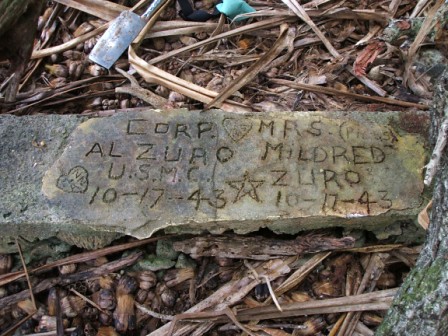
Our tour began in Tuvalu. During the war, more than 6,000 Americans occupied Tuvalu as they set up base on Funafuti and built airfields at Nukufetau and Nanumea. From this strategic location the US was able to bomb Japanese bases in Kiribati, Nauru and the Marshall Islands.
During our stay in Nukufetau we walked upon the old tarmac, now retaken by the atoll jungle, peered into a deep well dug during the war, now tainted and polluted, and pushed our way through the dense greens to see a downed B17. None of it seemed terribly real, just old artifacts left from a long time ago.
Then Chris happened upon two cement slabs nearly buried beneath the deep growth of the inner atoll. While one slab was unreadable, the other slab clearly read "Al Zuro ♥'s Mrs. Mildred Zuro", "USMC", "10-17-43". That's when the reality hit me. What entered my mind was an 18 year old boy (perhaps older at 20 or 22), newly married, battling a tropical heat he was unaccustomed to, miles from home, unknowing of what was to happen next ... thinking of his wife and previous life back home. What worried me most (and yes, I was truly worried, some 63 years later) was that by now I knew that the Battle of Tarawa, an extremely bloody battle, occurred just over a month later on November 20, 1943. Was the 10/17 date the inscription date or, since it was inscribed twice, could it have been their marriage date? If the former, was Al part of the Tarawa battle, and if so could he have possible survived?
The next time we had email access we anxiously emailed Chris' dad, Art, asking him to help us research Al and Mildred. It is amazing what Art can accomplish, he is a very thorough man! I'm not sure how many hours he put into it, but from the mounds of paperwork he showed us, it appears to be quite a few. Luckily all his diligent work paid off. I was extremely happy to hear that Al survived the war, and he and Mildred had four sons. He died on Friday, January 15, 1999 at the age of 78 (meaning that he was indeed around 22 years of age during his stint in Nukufetau). At the time of his death he had seven grandchildren, three great-grandchildren and was living in St Petersburg, Florida. Mildred died a few years later in 2002. The story was completed when Art was able to contact a couple of the sons to share this piece of family history.
We continued to see reminders of the war as we headed north into Kiribati. In Tabiteuea a large gun shell hung from a tree, used like a bell and for decoration. In Abemama pieces of another plane were covered by bush.
Battle of Tarawa

But the real tragedy of the war hit us when we reached Tarawa (Kiribati). In December of 1941 the Japanese bombed Ocean Island and took along with it, Butaritari, Makin, and Tarawa. From the accounts we've read and heard, it seems it didn't take long for the killing to begin. On October 14, 1942, twenty-two unarmed British Coast Watchers were murdered (supposedly be-headed) by the Japanese. The British Memorial (pictured right), dedicated to these twenty-two young men seems to be one of the few historical sites that most of the Tarawa locals know about. It stand beautifully within one of the local cemeteries.
In 1943 the US Marines attacked; the Betio attack was the first real battle of the Central Pacific, the first real test of the American Amphibious doctrine, and the first American troops to attack a defended atoll. The plan was to land over 18,000 Marines on the northern lagoon beaches. The landing area had been divided from west to east, into three beaches; Red Beach 1, 2 and 3. Intelligence had estimated between 2,500 and 3,100 Japanese forces. Interestingly enough these calculations were derived from the number of latrines (toilets) the Japanese had built (the latrines were multi-holed wooden "buildings" built over the water and clearly visible on aerial photographs). Even more interesting was that the estimated number was remarkable accurate! (The Japanese forces consisted of 2,619 combat troops. However, in addition there were 2,217 labor forces)
It is impossible to grasp the massiveness of the attack and the space it occurred in. Imagine 35,000 troops, 6,000 vehicles, 19 carriers, 12 battleships, and more; a fleet of warships covering 50 square miles of ocean, and a huge percentage of it was committed to the Betio attack. Now imagine Betio; less than 2 miles long and approximately 700 yards at its widest spot; its total acreage reaching barely 1/2 of a square mile. Think about it this way: it is about the size of New York's Central Park.
But even with huge forces, the attack wouldn't be easy. First, Betio had natural defenses, with 800 - 1200 yards of fringing reef and extreme tides. Next the Japanese had built a 3-5 foot high barricade from coconut logs, wired and stapled together, along the edge of the beach. Behind the barricade, machine gun emplacements were connected by trenches. Twenty-five 37mm-75mm field guns sat in pillboxes, so protected that only a direct hit from a large shell would be able to disable them. In total the Japanese had over 500 blockhouses and pillboxes. The Japanese also had fourteen coastal defense guns covering the beaches. On the seaward side (where Japanese had expected the attack to come from), the beaches had been mined and obstacles set up to funnel any invasion crafts into lanes covered by the artillery. Rear Admiral Shibasaki told his troops that the Americans could not take Tarawa with a million men in a hundred years.
On November 20, 1943 the Second Marine Division began the assault against Betio from within the lagoon. Due to the surrounding coral and low tide, the American landing craft could not make it to the shore; starting from 300-900 feet out the marines had to make their way in. 125 vehicles were able to make it over the reefs and assist the land assault. The LVTs (amphibious tractors or alligators) were able to deliver 1500 men to the beach. However the remaining troops had to wade in, chest deep in water, under fire. There was a lot of confusion, and a lot of death.
Red Beach 1 consisted of a deep cove easily defended by fire from both sides. Here the Japanese waited until the vehicles and marines were within a hundred yards of the beach and then opened fire; with the marines in a cross-fire between the arms of the cove.
On Red Beach 2 the Marines encountered the log barricade.
And just beyond the 800+ yards of beach that made up Red Beach 3, stood the Japanese Command Post Bunker; a 60 by 40 ft reinforced concrete blockhouse, standing 25 feet high, with two 13mm machine guns mounted on the roof.
5,000 men attacked that day, and by midnight more than 1500 were dead or wounded, making it the bloodiest day (up to then) in Marine Corp History. Even more horrifying was when Chris and I watched some of the video footage from the Tarawa battle; until then I hadn't really put 2 and 2 together enough to imagine what that many injured and dead people would look like in such a small space. I can't imagine how the survivors continued to function and fight.
Because the US couldn't get their full force ashore, and therefore couldn't get by the Japanese forces, the marines who did make it ashore had to spend the night huddled together on a narrow strip of beach. On the second day Major Ryan, his troops, and two tanks fought down the west coast and captured a large beach (called Green Beach). With this capture reinforcements could now land, along with heavy weaponry.
On Nov 23, 1943 the fighting ended. Betio was declared secured at 1312 on the 4th day. The battle lasted 72 hours and 42 minutes. Only 17 Japanese prisoners (along with 129 Koreans) were captured, another 4,690 estimated dead. There are conflicting totals on the American casualties, the numbers ranging between 3,110 to 3,407 killed, wounded, and missing; nearly 1% of the ENTIRE (390,000) Marine Corps officers and men. With over 1,000 men in the killed or missing category. The total death count (American and Japanese) neared 6,000. All in less than a 1/2 square mile.
The Battle of Tarawa made history in another way as well; the film With the Marines at Tarawa, was the first war footage with dead American soldiers to be released and shown in the States. While this bloody battle proved that the war would not easily be finished, thereby increasing war bond sales, it had a dramatic effect on military enlistments, causing a 35% drop.
Many other battles occurred in the Pacific, including the fierce battle at Iwo Jima, where the historical flag raising photograph was shot and remains a symbol of the courage and unconquerable will of our Military to this day. Two great books are; D-Days in the Pacific by Donald L Miller, and Flags of Our Fathers, by James Bradley with Ron Powers.
As Chris and I explored the structures and weapons now deserted for more than 60 years, I couldn't help but think of the young men (and in later wars, women) that fought not only in the Second World War, but in every battle that has occurred in America's short history. And closer to home, I felt a huge twinge of relief (and very lucky) that so many of my own family members have survived a variety of wars. There is a huge history of military, especially strong in the Marines, in my family, and as we walked through the ruins of war I had a tremendous urge to call them up and tell them how proud and thankful I am ... but also how very hopeful I am that the Battles of Tarawa someday cease forever.
Resources:
D-Days in the Pacific, by Donald L Miller
South Pacific, Lonely Planet
Flags of Our Fathers, James Bradley w/ Ron Powers
Britannica 2003 Deluxe Edition, CD-ROM
http://www.pacificwrecks.com
http://www.janeresture.com
Continue reading "The Second World War and The South Pacific"...
It started with an email from my Dad ... Did you know your Grandpa was in the following islands [during the war]...? For what I wondered, nothing happened out there, on those tiny little islands and atolls ... oh how wrong I was. Some of the largest D-Days of the war occurred in these remote "paradise" locations.
Our tour began in Tuvalu. During the war, more than 6,000 Americans occupied Tuvalu as they set up base on Funafuti and built airfields at Nukufetau and Nanumea. From this strategic location the US was able to bomb Japanese bases in Kiribati, Nauru and the Marshall Islands.
During our stay in Nukufetau we walked upon the old tarmac, now retaken by the atoll jungle, peered into a deep well dug during the war, now tainted and polluted, and pushed our way through the dense greens to see a downed B17. None of it seemed terribly real, just old artifacts left from a long time ago.
Then Chris happened upon two cement slabs nearly buried beneath the deep growth of the inner atoll. While one slab was unreadable, the other slab clearly read "Al Zuro ♥'s Mrs. Mildred Zuro", "USMC", "10-17-43". That's when the reality hit me. What entered my mind was an 18 year old boy (perhaps older at 20 or 22), newly married, battling a tropical heat he was unaccustomed to, miles from home, unknowing of what was to happen next ... thinking of his wife and previous life back home. What worried me most (and yes, I was truly worried, some 63 years later) was that by now I knew that the Battle of Tarawa, an extremely bloody battle, occurred just over a month later on November 20, 1943. Was the 10/17 date the inscription date or, since it was inscribed twice, could it have been their marriage date? If the former, was Al part of the Tarawa battle, and if so could he have possible survived?
The next time we had email access we anxiously emailed Chris' dad, Art, asking him to help us research Al and Mildred. It is amazing what Art can accomplish, he is a very thorough man! I'm not sure how many hours he put into it, but from the mounds of paperwork he showed us, it appears to be quite a few. Luckily all his diligent work paid off. I was extremely happy to hear that Al survived the war, and he and Mildred had four sons. He died on Friday, January 15, 1999 at the age of 78 (meaning that he was indeed around 22 years of age during his stint in Nukufetau). At the time of his death he had seven grandchildren, three great-grandchildren and was living in St Petersburg, Florida. Mildred died a few years later in 2002. The story was completed when Art was able to contact a couple of the sons to share this piece of family history.
We continued to see reminders of the war as we headed north into Kiribati. In Tabiteuea a large gun shell hung from a tree, used like a bell and for decoration. In Abemama pieces of another plane were covered by bush.
Battle of Tarawa
But the real tragedy of the war hit us when we reached Tarawa (Kiribati). In December of 1941 the Japanese bombed Ocean Island and took along with it, Butaritari, Makin, and Tarawa. From the accounts we've read and heard, it seems it didn't take long for the killing to begin. On October 14, 1942, twenty-two unarmed British Coast Watchers were murdered (supposedly be-headed) by the Japanese. The British Memorial (pictured right), dedicated to these twenty-two young men seems to be one of the few historical sites that most of the Tarawa locals know about. It stand beautifully within one of the local cemeteries.
In 1943 the US Marines attacked; the Betio attack was the first real battle of the Central Pacific, the first real test of the American Amphibious doctrine, and the first American troops to attack a defended atoll. The plan was to land over 18,000 Marines on the northern lagoon beaches. The landing area had been divided from west to east, into three beaches; Red Beach 1, 2 and 3. Intelligence had estimated between 2,500 and 3,100 Japanese forces. Interestingly enough these calculations were derived from the number of latrines (toilets) the Japanese had built (the latrines were multi-holed wooden "buildings" built over the water and clearly visible on aerial photographs). Even more interesting was that the estimated number was remarkable accurate! (The Japanese forces consisted of 2,619 combat troops. However, in addition there were 2,217 labor forces)
It is impossible to grasp the massiveness of the attack and the space it occurred in. Imagine 35,000 troops, 6,000 vehicles, 19 carriers, 12 battleships, and more; a fleet of warships covering 50 square miles of ocean, and a huge percentage of it was committed to the Betio attack. Now imagine Betio; less than 2 miles long and approximately 700 yards at its widest spot; its total acreage reaching barely 1/2 of a square mile. Think about it this way: it is about the size of New York's Central Park.
Blockhouse: A structure of heavy timbers or reinforced concrete used for military defense with sides loopholed and pierced for gunfire and often with a projecting upper story
Pillbox: A small low concrete emplacement for machine guns and antitank weapons
But even with huge forces, the attack wouldn't be easy. First, Betio had natural defenses, with 800 - 1200 yards of fringing reef and extreme tides. Next the Japanese had built a 3-5 foot high barricade from coconut logs, wired and stapled together, along the edge of the beach. Behind the barricade, machine gun emplacements were connected by trenches. Twenty-five 37mm-75mm field guns sat in pillboxes, so protected that only a direct hit from a large shell would be able to disable them. In total the Japanese had over 500 blockhouses and pillboxes. The Japanese also had fourteen coastal defense guns covering the beaches. On the seaward side (where Japanese had expected the attack to come from), the beaches had been mined and obstacles set up to funnel any invasion crafts into lanes covered by the artillery. Rear Admiral Shibasaki told his troops that the Americans could not take Tarawa with a million men in a hundred years.
Amphibious Vehicle: A device for transporting personnel and equipment that can operate as a wheeled or tracked vehicle on land and as a boat in water. Two principal types appeared during World War II: the LVT (“landing vehicle, tracked”), and the “duck” (DUKW), The LVT resembled a tank, whereas the duck moved on rubber tires ashore and was propeller-driven when afloat.
On November 20, 1943 the Second Marine Division began the assault against Betio from within the lagoon. Due to the surrounding coral and low tide, the American landing craft could not make it to the shore; starting from 300-900 feet out the marines had to make their way in. 125 vehicles were able to make it over the reefs and assist the land assault. The LVTs (amphibious tractors or alligators) were able to deliver 1500 men to the beach. However the remaining troops had to wade in, chest deep in water, under fire. There was a lot of confusion, and a lot of death.
Red Beach 1 consisted of a deep cove easily defended by fire from both sides. Here the Japanese waited until the vehicles and marines were within a hundred yards of the beach and then opened fire; with the marines in a cross-fire between the arms of the cove.
On Red Beach 2 the Marines encountered the log barricade.
And just beyond the 800+ yards of beach that made up Red Beach 3, stood the Japanese Command Post Bunker; a 60 by 40 ft reinforced concrete blockhouse, standing 25 feet high, with two 13mm machine guns mounted on the roof.
5,000 men attacked that day, and by midnight more than 1500 were dead or wounded, making it the bloodiest day (up to then) in Marine Corp History. Even more horrifying was when Chris and I watched some of the video footage from the Tarawa battle; until then I hadn't really put 2 and 2 together enough to imagine what that many injured and dead people would look like in such a small space. I can't imagine how the survivors continued to function and fight.
Because the US couldn't get their full force ashore, and therefore couldn't get by the Japanese forces, the marines who did make it ashore had to spend the night huddled together on a narrow strip of beach. On the second day Major Ryan, his troops, and two tanks fought down the west coast and captured a large beach (called Green Beach). With this capture reinforcements could now land, along with heavy weaponry.
On Nov 23, 1943 the fighting ended. Betio was declared secured at 1312 on the 4th day. The battle lasted 72 hours and 42 minutes. Only 17 Japanese prisoners (along with 129 Koreans) were captured, another 4,690 estimated dead. There are conflicting totals on the American casualties, the numbers ranging between 3,110 to 3,407 killed, wounded, and missing; nearly 1% of the ENTIRE (390,000) Marine Corps officers and men. With over 1,000 men in the killed or missing category. The total death count (American and Japanese) neared 6,000. All in less than a 1/2 square mile.
The Battle of Tarawa made history in another way as well; the film With the Marines at Tarawa, was the first war footage with dead American soldiers to be released and shown in the States. While this bloody battle proved that the war would not easily be finished, thereby increasing war bond sales, it had a dramatic effect on military enlistments, causing a 35% drop.
Many other battles occurred in the Pacific, including the fierce battle at Iwo Jima, where the historical flag raising photograph was shot and remains a symbol of the courage and unconquerable will of our Military to this day. Two great books are; D-Days in the Pacific by Donald L Miller, and Flags of Our Fathers, by James Bradley with Ron Powers.
As Chris and I explored the structures and weapons now deserted for more than 60 years, I couldn't help but think of the young men (and in later wars, women) that fought not only in the Second World War, but in every battle that has occurred in America's short history. And closer to home, I felt a huge twinge of relief (and very lucky) that so many of my own family members have survived a variety of wars. There is a huge history of military, especially strong in the Marines, in my family, and as we walked through the ruins of war I had a tremendous urge to call them up and tell them how proud and thankful I am ... but also how very hopeful I am that the Battles of Tarawa someday cease forever.
Resources:
D-Days in the Pacific, by Donald L Miller
South Pacific, Lonely Planet
Flags of Our Fathers, James Bradley w/ Ron Powers
Britannica 2003 Deluxe Edition, CD-ROM
http://www.pacificwrecks.com
http://www.janeresture.com
Continue reading "The Second World War and The South Pacific"...
Subscribe to:
Posts (Atom)


